




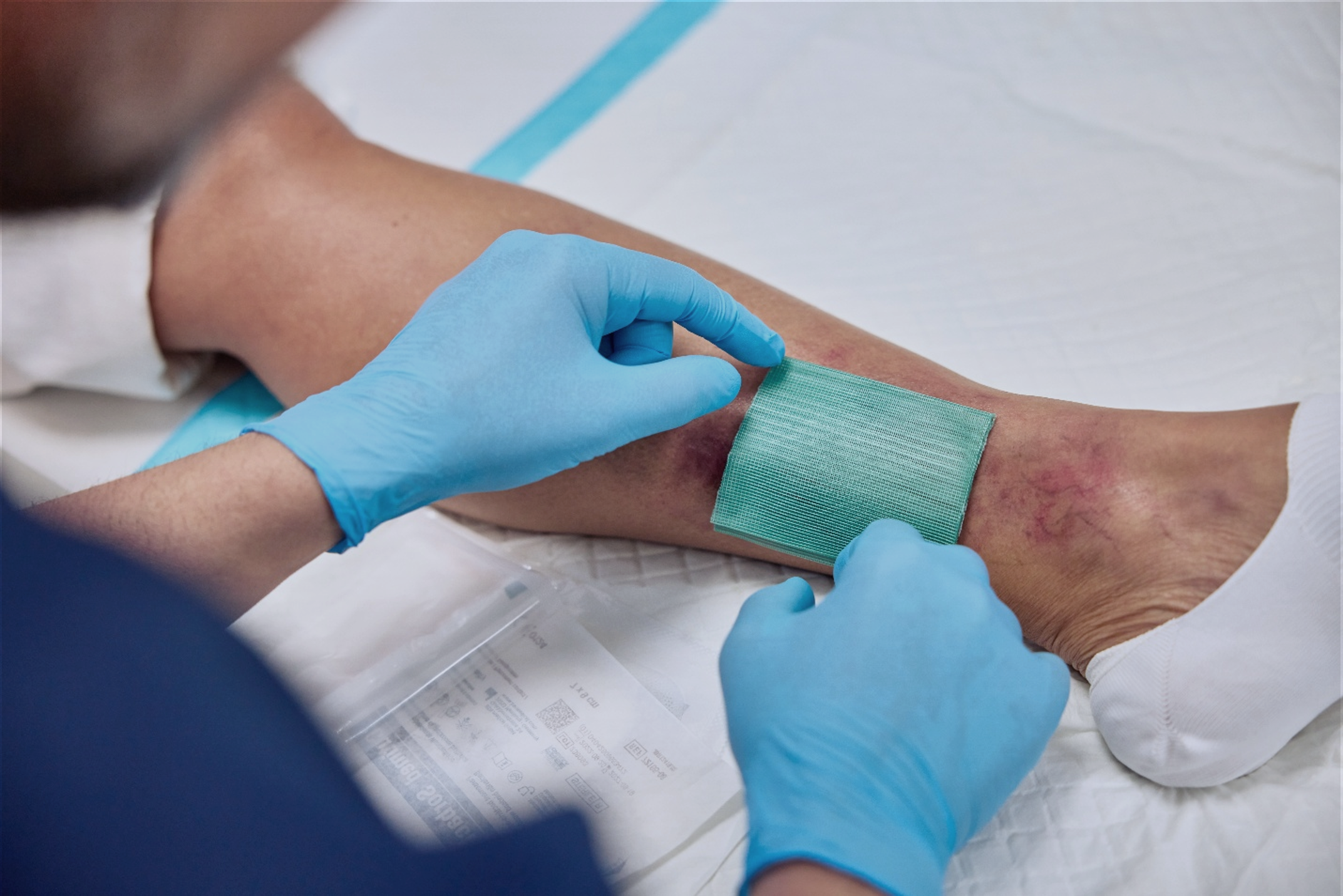
Wound infection continues to challenge healthcare systems globally, delaying healing, increasing costs, and significantly impacting patient quality of life. When it comes to chronic or hard-to-heal wounds, approximately 40% develop a wound infection1, increasing average healing time by four months and overall treatment costs by at least 40%.2
As antimicrobial resistance (AMR) rises, clinicians must rethink traditional approaches and adopt strategies aligned with antimicrobial stewardship (AMS). Today, the focus is shifting from the reactive management of wound infection to proactive infection prevention, supported by innovative technologies such as microbial-binding dressings.
A Historical Reliance on Antimicrobials
For decades, clinicians have relied heavily on antimicrobial strategies such as systemic and topical antibiotics, and topical antiseptic dressings (e.g. silver, iodine, PHMB).3 Silver has been a cornerstone in wound care due to its broad-spectrum antimicrobial activity and ability to disrupt bacterial structures such as biofilm.
However, this reliance has come at a cost.
Antimicrobial Resistance: A Growing Threat in Wound Care
Driven by selective pressure from antimicrobial overuse or misuse, AMR is now recognised as a global health threat4, with 4.95 million deaths being associated with AMR in 2019.5 In a global survey of more than 700 clinicians who are actively involved in the treatment of wounds, more than 41% reported the use of antimicrobials “just in case”.6 This highlights the notion that inappropriate antimicrobial use is still widespread, even in non-infected wounds, and unfortunately the complications are serious:
- Reduced effectiveness of potentially lifesaving treatments
- Increasing complications and mortality
- Greater healthcare resource utilisation
Silver Resistance: An Emerging Concern
Silver has long been seen as a “safe” antimicrobial, but emerging evidence challenges this assumption. A recent review identified increasing reports of silver-resistant bacteria, including key wound pathogens (e.g. E. coli, S. aureus, and P. aeruginosa).3
Potentially even more concerning is the link between silver and antibiotic resistance. Exposure to silver can select for resistance to a second antimicrobial agent such as antibiotics.3 This occurs through mechanisms such as:
- Co-resistance (shared genetic elements)
- Cross-resistance (single mechanism affects multiple agents)
- Co-regulation (linked gene expression)
The overuse of topical antimicrobials may therefore indirectly reduce the effectiveness of systemic antibiotics – one of our most critical healthcare resources.
A New Direction for Antimicrobial Stewardship
In response to increasing concerns of AMR, the “International guideline on antimicrobial stewardship and the role of microbial binding dressings in wound care 2026” provides clear direction for the purpose of preventing AMR: 4
- Microbial-binding dressings, such as those containing Sorbact® Technology, should be used as a first-line therapy in the prevention, early intervention, and treatment of wound infection, for closed surgical incisions and hard-to-heal wounds.
- Antiseptic dressings should only be considered as a second line therapy for wounds with local, spreading, or systemic infection, and who have not improved with the use of microbial-binding dressings.
- Use antibiotics only when clinically indicated to reduce unnecessary exposure, such as for wounds with spreading or systemic infection.
The guideline includes four easy-to-use AMS clinical pathways to support clinicians with the practical implementation of AMS strategies, guide decision making in relation to holistic wound assessment and management, and promote a consistent approach to care.
- Antimicrobial Stewardship Pathway: Closed Surgical Incisions
- Antimicrobial Stewardship Pathway: Hard-to-Heal Wounds
- Antimicrobial Stewardship Pathway: Diabetes-Related Foot Ulcers
- Antimicrobial Stewardship Pathway: Venous Leg Ulcers
Most importantly, these AMS pathways support clinicians to:4
- Prevent infection, not just manage it
- Reduce unnecessary antimicrobial use
- Minimise risk of AMR
- Improve healing and patient outcomes
Microbial-Binding Dressings: A First-Line AMS Strategy
Unlike traditional antimicrobial dressings, microbial-binding dressings work without releasing active substances.
Cutimed® Sorbact® containing Sorbact® Technology is one innovative product within this space. Unlike traditional dressings that rely on chemical agents like silver or iodine, Sorbact® works through a physical mode of action. Its hydrophobic surface irreversibly binds bacteria and fungi, removing them from the wound bed when the dressing is changed. Because this mechanism is physical rather than chemical, it does not exert selective pressure on microorganisms, meaning antimicrobial resistance is not expected to develop.
Clinically, Sorbact® helps control microbial burden at the wound surface and can be used alongside standard infection prevention protocols. This supports early, proactive intervention in line with AMS principles, which can prevent infection and reduce the need for antibiotics7, minimising the risk of AMR.
A Smarter Path Forward
Wound infection is a complex and costly challenge, but one that can be better managed through smarter, sustainable strategies.
In a world where antimicrobial resistance is rising, the question is no longer “How do we treat infection?” But rather “How do we prevent it – safely, effectively, and sustainably?”
The integration of AMS strategies, structured clinical pathways, and innovative technologies like Sorbact®, represent a critical step in the right direction. By moving towards early intervention and non-resistance-based therapies, clinicians can improve healing outcome, reduce healthcare costs, and safeguard the future effectiveness of antibiotics.
Check out Team Medical’s range of Sorbact® dressings to fight infection before it begins.
Start Smart. Start with Sorbact® Technology.
Sources: